
Ultra-Processed Foods and Crohn's Disease: What to Know

This article is for informational purposes only and does not constitute medical advice. Always consult your healthcare provider before making any changes to your treatment plan.
For many of us living with Crohn's disease, the question of what to eat can feel relentless. We carefully read labels, dodge known triggers, and still wonder whether something we grabbed off the shelf is quietly making things worse. A growing body of research is now pointing a spotlight at a category of foods most of us eat every day without a second thought: ultra-processed foods. Multiple large-scale studies suggest that ultra-processed foods and Crohn's disease risk are more closely linked than most patients realize - and the numbers are hard to ignore.
Understanding this connection is not about adding more fear to an already stressful relationship with food. It is about having clear, evidence-based information so you can make informed choices alongside your healthcare team. Here is what five major studies tell us, which specific ultra-processed foods carry the most risk, and practical steps you can start taking today.
Key Takeaways
- Patients with the highest ultra-processed food intake faced a 70% to 100% increased risk of developing Crohn's disease across two large cohort studies (1)(3)
- Crohn's patients in remission who ate more than 3.6 daily UPF servings had a relapse rate of 33.7% versus 15.1% for lower consumers (2)
- Ultra-processed breads, pastries, frozen ready meals, sauces, and spreads carried the strongest associations with disease risk and relapse (1)(2)
- The link between ultra-processed foods and Crohn's disease is consistently stronger than the link with ulcerative colitis across multiple studies
- Reducing UPF intake does not mean cooking everything from scratch - simple swaps and meal prepping during remission can make a meaningful difference
What Are Ultra-Processed Foods?
Ultra-processed foods (UPFs) are industrial formulations made mostly or entirely from substances derived from foods, with little or no intact whole food remaining. They are engineered for convenience, long shelf life, and intense flavor - and they make up a surprisingly large share of the modern diet in many countries.
The NOVA Classification System
The most widely used framework for categorizing food by degree of processing is the NOVA classification, developed by researchers at the University of Sao Paulo. It divides all foods into four groups:
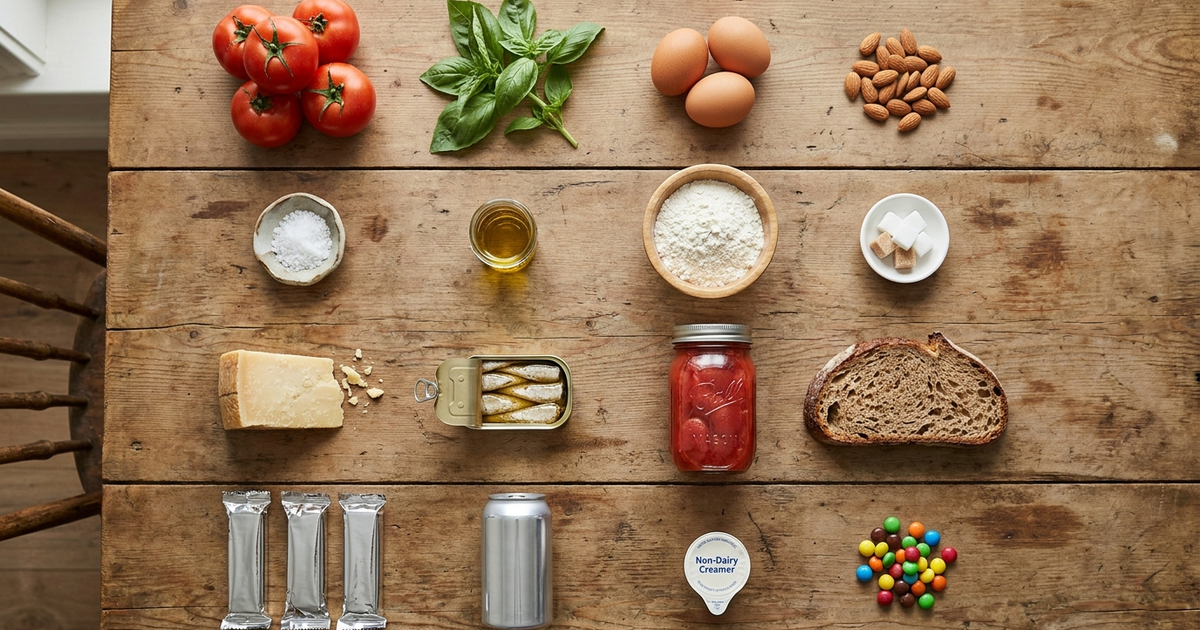
- Group 1 - Unprocessed or minimally processed foods: Fresh fruits, vegetables, eggs, plain meats, legumes, nuts, milk, and grains like rice and oats
- Group 2 - Processed culinary ingredients: Oils, butter, sugar, salt, and flour used in home cooking
- Group 3 - Processed foods: Foods made by combining Group 1 and Group 2 items with simple methods like canning, bottling, or fermentation (canned vegetables, artisan cheeses, traditionally baked bread)
- Group 4 - Ultra-processed foods: Industrial formulations with five or more ingredients, typically including substances not used in home cooking (emulsifiers, hydrogenated oils, high-fructose corn syrup, flavor enhancers, colorings)
It is Group 4 that has drawn the attention of IBD researchers. These are not foods that have simply been cooked or preserved - they are products designed in laboratories, manufactured at scale, and loaded with additives that have no equivalent in a home kitchen.
Common Examples of UPFs
UPFs are everywhere, and recognizing them is the first step. Common examples include:
- Soft drinks and energy drinks
- Packaged snacks (chips, crackers, flavored popcorn)
- Mass-produced breads and pastries
- Instant noodles and soups
- Frozen ready meals and pizza
- Processed meats (hot dogs, chicken nuggets, deli meats with additives)
- Sweetened breakfast cereals
- Flavored yogurts with long ingredient lists
- Packaged sauces, dressings, and spreads
- Margarine and non-dairy creamers
A quick way to spot a UPF: if the ingredient list includes substances you would not find in a home kitchen - things like maltodextrin, carrageenan, polysorbate-80, or "natural flavors" - it is very likely ultra-processed. As we discussed in our article on the low-emulsifier diet for Crohn's disease, many of these additives have drawn specific concern in IBD research.
What Research Says About UPFs and Crohn's Disease
The evidence linking ultra-processed food intake to Crohn's disease has grown substantially in recent years. Three major prospective cohort studies, collectively involving more than half a million participants, paint a consistent picture.
Large Cohort Studies Show Elevated Risk
In a study of 245,112 U.S. health professionals followed over multiple years, Lo and colleagues found that those with the highest ultra-processed food intake had a 70% increased risk of developing Crohn's disease (HR 1.70) compared to the lowest consumers (1). This was not a small or loosely designed survey - it drew from three well-established cohorts with detailed dietary assessments.
A separate analysis using the UK Biobank, covering 187,154 participants, found the association was even stronger. High UPF intake roughly doubled the risk of incident Crohn's disease (HR 2.00, 95% CI: 1.32-3.03, p = 0.001) (3). This study also found that high UPF consumption was associated with a striking 4-fold increased need for surgery among Crohn's patients (HR 4.06, 95% CI: 1.52-10.86) (3) - a finding that underscores the potential severity of the connection.
Internationally, the PURE cohort study tracked participants across multiple countries and found that five or more daily UPF servings were linked to incident IBD compared to fewer than one serving (HR approximately 1.8) (5). The consistency of these findings across different populations, study designs, and dietary assessment methods adds weight to the overall evidence.
The Association Is Stronger for Crohn's Than Ulcerative Colitis
One interesting pattern across these studies is that the association between UPF intake and disease risk appears consistently stronger for Crohn's disease than for ulcerative colitis. While some studies found modest associations with UC, many found the link was weak or not statistically significant (1)(5). This suggests that the mechanisms by which UPFs promote intestinal inflammation may be particularly relevant to the small bowel and transmural inflammation characteristic of Crohn's disease. A 2025 narrative review synthesizing the epidemiological and mechanistic evidence confirmed this pattern, noting that the Crohn's-specific associations were robust across study designs (5).
How UPFs May Trigger Gut Inflammation
Understanding why ultra-processed foods may be harmful goes beyond simply noting the statistical associations. A growing body of preclinical and mechanistic research is revealing how specific UPF components interact with the gut in ways that are particularly relevant for Crohn's disease patients.
Barrier Disruption and Microbiome Changes
Your intestinal lining is a carefully maintained barrier - a single layer of epithelial cells covered by a protective mucus layer that keeps trillions of gut bacteria at a safe distance from your immune system. Research has shown that several UPF additives can compromise this barrier in multiple ways.
Emulsifiers like carboxymethylcellulose (CMC) and polysorbate-80 have been shown in animal studies to thin the protective mucus layer, allowing bacteria to contact the intestinal wall directly (5). When this happens, the immune system mounts an inflammatory response - and in people with Crohn's, that response is already amplified and difficult to control.
UPFs have also been linked to significant shifts in the gut microbiome. High UPF diets are associated with reduced diversity of beneficial bacteria and lower production of short-chain fatty acids (SCFAs) - the compounds produced by healthy gut bacteria that help maintain the intestinal barrier and regulate inflammation (5). For those of us interested in supporting microbiome health, our article on probiotics and prebiotics explores the other side of this equation - what can help build up the microbial communities that UPFs may be disrupting.
Specific Additives of Concern
Not all components of UPFs are equally problematic. Research has highlighted several additives that warrant particular attention:
- Emulsifiers (carrageenan, CMC, polysorbate-80): Directly damage the mucus barrier and promote bacterial translocation in animal models (5). The recent ADDapt trial showed that reducing emulsifier intake led to meaningful improvements in inflammation markers in Crohn's patients.
- Maltodextrin: A common thickener and filler linked to increased adhesion of pathogenic bacteria to intestinal cells and promotion of biofilm formation (5)
- Artificial sweeteners: Some studies suggest they can alter the gut microbiome composition and glucose metabolism, though evidence in IBD specifically is still emerging
- High-fructose corn syrup: Associated with increased intestinal permeability and pro-inflammatory immune signaling in preclinical models
These additives rarely appear alone in ultra-processed products. A single frozen ready meal or packaged snack may contain several of them, which raises the possibility that their effects are additive or synergistic - compounding the potential for harm.
UPFs and Crohn's Disease Flare-Ups
For patients already living with Crohn's disease, the question is not just about initial risk - it is about staying in remission. Emerging research suggests that UPF intake matters here too, and perhaps even more urgently.
Research on Relapse Risk
A 2025 prospective study by Sarbagili-Shabat and colleagues followed Crohn's disease patients who were in clinical remission and tracked their dietary habits alongside disease outcomes (2). The results were striking: patients consuming more than 3.6 daily servings of ultra-processed foods had a relapse rate of 33.7%, compared to just 15.1% among those with lower UPF intake. After adjusting for confounders, this translated to a nearly 4-fold increased risk of relapse (HR 3.86) (2).
To put that in perspective, roughly one in three high-UPF consumers relapsed, compared to approximately one in seven among lower consumers. For anyone who has fought hard to achieve remission, those numbers deserve serious attention.
Which UPF Categories Carry the Most Risk
Not all ultra-processed foods appear to carry equal risk. Across the studies reviewed, certain categories consistently emerged as most strongly associated with Crohn's disease risk and relapse (1)(2):
- Ultra-processed breads and pastries: Mass-produced versions containing emulsifiers, dough conditioners, and preservatives
- Frozen ready meals: High in multiple additives, often combining emulsifiers, flavor enhancers, and modified starches
- Sauces and spreads: Packaged sauces, dressings, and condiments loaded with emulsifiers and thickeners
- Processed meats: Products like hot dogs and chicken nuggets that combine multiple UPF additives
- Sweetened beverages: Soft drinks and energy drinks with artificial sweeteners and colorings
This does not mean every UPF is equally harmful, but it does suggest that some categories deserve more caution than others when you are trying to maintain remission.
Practical Steps to Reduce Ultra-Processed Foods
Knowing the research is one thing. Living with it is another, especially when energy is low, symptoms are unpredictable, and the convenience aisle is right there. Here are realistic strategies that acknowledge the reality of life with Crohn's.
Simple Swaps for Everyday Eating
The goal is not perfection - it is progress. Small, sustainable swaps can meaningfully reduce your overall UPF intake without requiring a complete kitchen overhaul:
- Bread: Swap mass-produced packaged white bread for traditionally baked sourdough or whole grain bread with a short ingredient list
- Sauces: Replace jarred pasta sauces (often containing sugar, emulsifiers, and flavor enhancers) with a simple homemade version - crushed tinned tomatoes, olive oil, garlic, and salt
- Snacks: Choose whole fruit, plain nuts, or cheese instead of packaged chips and flavored crackers
- Breakfast: Trade sweetened cereals for oats with fresh fruit, or eggs with whole grain toast
- Beverages: Replace soft drinks with water, herbal tea, or sparkling water with a squeeze of citrus
- Ready meals: When possible, batch cook simple meals from whole ingredients and freeze portions for later
These are not dramatic changes, and none of them require advanced cooking skills. They do require a small shift in habit - and that shift gets easier with time.
Strategies for Difficult Days
Any honest conversation about dietary changes for Crohn's patients has to acknowledge the hard truth: there are days when cooking from scratch is simply not possible. Flare days, fatigue, brain fog, post-surgical recovery - these are real, and no one should feel guilty about reaching for convenience when survival mode kicks in.
For those days, here are some minimally processed convenience options that can fill the gap:
- Pre-washed salad greens with tinned fish (tuna, sardines) and olive oil
- Plain frozen vegetables (without sauces) that you can microwave in minutes
- Pre-cooked rice or quinoa pouches with a short ingredient list
- Rotisserie chicken from the deli counter (check for minimal additives)
- Plain yogurt (without added flavors or sweeteners) with honey
- Nut butter on whole grain bread
Meal prepping during remission is one of the most practical strategies available. Spending a couple of hours on a good day cooking and freezing portions of simple soups, stews, or grain bowls means having homemade convenience meals ready when you need them most. As we covered in our guide to nutrition and IBD, finding sustainable dietary patterns is more important than following any single rule perfectly.
Working with Your Healthcare Team on Diet
It is worth stating clearly: reducing ultra-processed food intake is one dietary strategy among many, and it is not a replacement for medical treatment. The studies discussed here show associations - strong and consistent ones - but dietary changes should complement, not replace, the medications and treatment plans your gastroenterologist has prescribed.
If you are interested in reducing your UPF intake, consider asking your doctor for a referral to a registered dietitian experienced with IBD. A dietitian can help you:
- Identify which UPFs in your current diet could be swapped out first
- Ensure you are still meeting your nutritional needs, especially during active disease
- Combine UPF reduction with other evidence-based dietary approaches, such as the Mediterranean diet, which shares many principles (emphasizing whole foods, healthy fats, and minimally processed ingredients)
- Navigate the balance between reducing UPFs and maintaining enough caloric intake during flares
Every patient's triggers and tolerances are different. What matters most is working with professionals who understand both the evidence and your individual situation, and making changes that you can sustain over the long term.
Frequently Asked Questions
Are all processed foods bad for Crohn's disease?
No. There is an important distinction between processed and ultra-processed foods. Canned vegetables, frozen fruits, plain cheese, and traditionally baked bread are processed but not ultra-processed. The NOVA classification reserves the ultra-processed category for industrial formulations with multiple additives not found in home kitchens. The research linking food processing to Crohn's disease risk focuses specifically on this ultra-processed category (1)(3).
How many ultra-processed food servings per day is considered high risk?
The 2025 Sarbagili-Shabat study found that Crohn's patients in remission who consumed more than 3.6 daily UPF servings had significantly higher relapse rates (2). The PURE cohort study used a threshold of five or more daily servings for its highest-risk category (5). While there is no universally defined "safe" number, reducing below these levels appears to be associated with lower risk.
Does reducing ultra-processed foods guarantee I will stay in remission?
No. Diet is one factor among many that influence Crohn's disease activity. Genetics, medication adherence, stress, sleep, and other environmental factors all play a role. The research shows that reducing UPF intake is associated with lower relapse risk, but it cannot guarantee remission on its own. Dietary changes work best alongside - not in place of - your prescribed medical treatment.
Why is the link stronger for Crohn's disease than ulcerative colitis?
Researchers are not entirely sure, but the leading theory relates to where each disease occurs. Crohn's disease can affect any part of the gastrointestinal tract and involves deeper tissue layers, whereas ulcerative colitis is limited to the colon's inner lining. UPF additives that damage the mucus barrier and increase intestinal permeability may have a greater impact on the small intestine and deeper tissue, which is more characteristic of Crohn's (5).
What should I ask my doctor about ultra-processed foods and my Crohn's?
Consider asking: "Based on my current disease state, would reducing ultra-processed foods be a useful addition to my treatment plan?" You might also ask for a referral to a registered dietitian experienced with IBD who can help you make practical dietary changes. Bring specific questions about which foods in your current diet fall into the ultra-processed category and what realistic swaps might look like for your situation.
Can children with Crohn's disease benefit from reducing UPFs?
The major cohort studies discussed here were conducted in adult populations, so the evidence does not directly apply to children. However, the mechanisms of harm - barrier disruption, microbiome changes, immune activation - are likely relevant across age groups. Pediatric Crohn's patients should work closely with their gastroenterologist and a pediatric dietitian before making significant dietary changes, as adequate nutrition is especially critical during growth and development.
Is it realistic to eliminate all ultra-processed foods?
For most people, complete elimination is neither realistic nor necessary. The research suggests that reducing UPF intake - not necessarily eliminating it entirely - is associated with lower risk. A gradual approach, swapping out the highest-risk categories first (ultra-processed breads, frozen ready meals, sweetened beverages, packaged sauces), is more sustainable and still meaningful. Progress, not perfection, is the goal.
References
- Lo, C.H., et al. Ultra-processed Foods and Risk of Crohn's Disease and Ulcerative Colitis: A Prospective Cohort Study. Clinical Gastroenterology and Hepatology, 2022. Read study
- Sarbagili-Shabat, C., et al. High Ultra-Processed Food Consumption Is Associated with Clinical Exacerbation in Patients with Crohn's Disease in Remission: A Prospective Cohort Study. Digestive Diseases, 2025. Read study
- Chen, J., et al. Intake of Ultra-processed Foods Is Associated with an Increased Risk of Crohn's Disease: A Cross-sectional and Prospective Analysis of 187,154 Participants in the UK Biobank. Journal of Crohn's and Colitis, 2022. Read study
- How ultra-processed foods shape Crohn's disease risk and what dietary strategies can really help. News-Medical.net, 2025. Read article
- Ultra-Processed Foods and Inflammatory Bowel Disease: A Narrative Review of Epidemiology, Mechanisms, and Dietary Implications. 2025. Read study
Recommended Resources
Browse ResourcesRelated Articles

Vitamin D and Crohn's Disease: Why Supplementation Matters
Learn how vitamin D supplementation may reduce Crohn's disease flares by up to 53%. Discover optimal levels, dosing, and what the latest research shows.

Mediterranean Diet for Crohn's Disease: What Research Shows
Discover how the Mediterranean diet can help manage Crohn's disease symptoms, reduce inflammation, and improve gut health based on recent clinical evidence.

Low Emulsifier Diet for Crohn's Disease: ADDapt Trial Results
The landmark 154-patient ADDapt trial found Crohn's patients on a low emulsifier diet were 3x more likely to improve. Here's what the evidence shows.

Fasting-Mimicking Diet for Crohn's Disease: New Evidence
New 2026 Nature Medicine research shows a fasting-mimicking diet helped nearly 70% of people with mild-to-moderate Crohn's disease. Evidence explained.

Eating Sustainably with Crohn’s Disease
Can you eat Eco-Friendly with Crohn’s disease? Explore sustainable diet options that support your health while benefiting the planet.

Bioengineered Foods and Crohn’s Disease: Potential Risks and Benefits
Explore how bioengineered foods impact Crohn’s disease. Learn about potential risks, benefits, and what this innovation means for gut health.